Termites are often called the “silent destroyers” — and for good reason. Unlike other household pests, termites work quietly behind walls, under floors, and inside wooden structures, often causing serious structural damage long before a homeowner notices anything wrong. By the time visible signs appear, an infestation may already be well established.
Understanding the early warning signs can save you thousands of shillings in repair costs and protect the structural integrity of your home. Here’s what to look out for — and what to do about it.
Why Termites Are So Dangerous
Termites feed on cellulose, the main component of wood, paper, and some plant-based materials. A mature termite colony can contain hundreds of thousands of individuals, working around the clock to consume wood from the inside out. This means:
- Structural timber, door frames, and roofing supports can be hollowed out without any visible damage on the surface
- Repairs from advanced termite damage are far more expensive than early treatment
- Termite damage is typically not covered by standard home insurance policies in Kenya, since it’s classified as gradual, preventable damage
1. Mud Tubes on Walls or Foundations
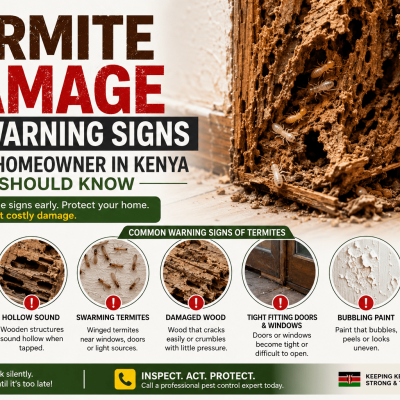
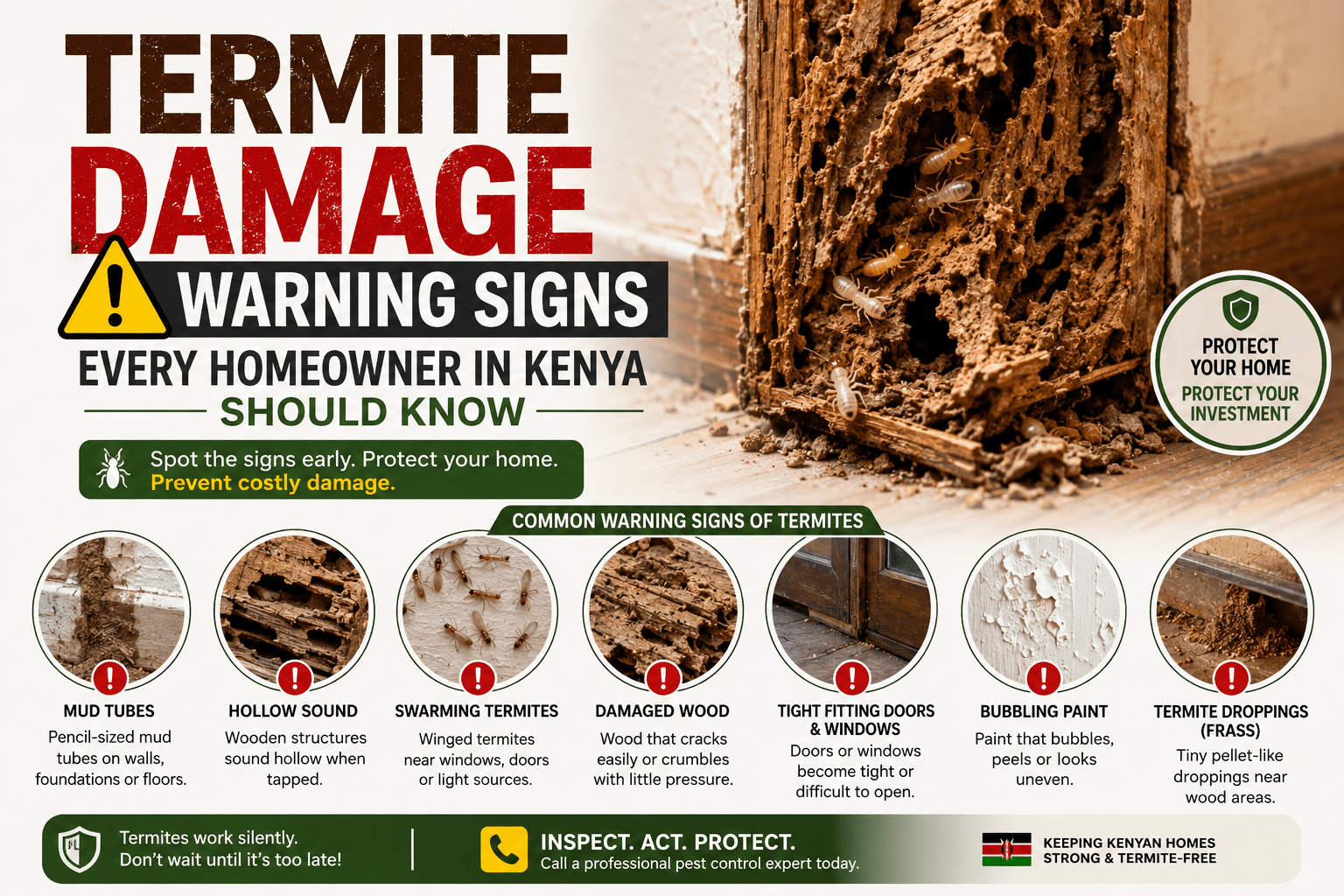
Subterranean termites — the most common and destructive type — build pencil-thin mud tunnels along walls, foundations, and support beams to travel between their underground nest and their food source while staying protected from open air and predators.
What to look for: Thin, brownish tubes running vertically along exterior or interior walls, often near the ground.
2. Hollow-Sounding Wood
Because termites eat wood from the inside, the outer surface can look completely normal while the interior is hollowed out.
What to look for: Tap on wooden beams, door frames, or skirting boards. A hollow or papery sound (instead of a solid thud) is a red flag.
3. Discarded Wings Near Windows or Light Fixtures
When a termite colony matures, it produces winged reproductive termites (“swarmers”) that fly out to start new colonies. After swarming, they shed their wings.
What to look for: Small piles of discarded, translucent wings near windowsills, doors, or light fixtures — especially at the start of the rainy season, a common swarming period.
4. Frass (Termite Droppings)
Drywood termites push their droppings out of small holes in infested wood, leaving behind tiny pellet-like deposits.
What to look for: Small mounds of what looks like fine sawdust or coffee grounds near wooden furniture, window frames, or skirting boards.
5. Buckling or Blistering Wood Floors and Paint
As termites tunnel through wood and moisture gets trapped, floors and painted surfaces can warp or blister — often mistaken for water damage.
What to look for: Wood flooring that appears to bulge, floors that feel spongy underfoot, or paint that bubbles without an obvious leak nearby.
6. Tight-Fitting Doors and Windows
Termite activity can warp wood framing as moisture builds up inside damaged timber, causing doors and windows to stick or become difficult to open and close.
What to look for: Doors or windows that suddenly become hard to operate without any other explanation (like humidity changes).
7. Visible Maze Patterns in Damaged Wood
If you come across an old piece of furniture, a fence post, or structural timber that’s damaged, cut it open or check any exposed break.
What to look for: Maze-like tunnels or galleries running through the wood grain — a signature sign of termite feeding.
Termite Types Common in Kenya
| Termite Type | Nesting Behavior | Common Signs |
|---|---|---|
| Subterranean termites | Nest underground, build mud tubes to reach wood | Mud tubes on walls/foundations, hollow wood |
| Drywood termites | Nest directly inside dry wood, no soil contact needed | Frass (pellets), damaged furniture, small exit holes |
| Harvester termites | Forage above ground, often visible in gardens and lawns | Bare patches in grass, visible foraging trails |
What to Do If You Spot These Signs
- Avoid disturbing the area — knocking down mud tubes or spraying random insecticide can scatter the colony and make treatment harder
- Document what you find — photos help a professional assess the extent of the infestation
- Book a professional inspection immediately — termite colonies grow quickly, and early intervention is far cheaper than structural repair
- Ask about a prevention plan — especially if your home has significant wood structures, is near vegetation, or has had termite activity before
Prevention Tips to Reduce Termite Risk
- Keep firewood and timber stored away from the house and off the ground
- Fix leaking pipes and poor drainage — termites are drawn to moisture
- Avoid wood-to-soil contact on decks, fences, and door frames
- Schedule an annual termite inspection, especially before the rainy season
- Clear wood debris and tree stumps from around your compound
FAQ
Q: How fast can termites damage a house? A: Depending on colony size, visible structural damage can occur within a few months to a couple of years. Colonies can go undetected for a long time before damage becomes obvious.
Q: Are termite swarmers the same as flying ants? A: No, though they’re often confused. Termites have straight antennae, a thick waist, and wings of equal length, while flying ants have bent antennae, a pinched waist, and wings of unequal length.
Q: Can I treat a termite infestation myself? A: DIY treatments (sprays, baits) often only address the visible termites, leaving the main colony intact. Professional treatment targets the colony at its source for long-term elimination.
Q: How often should I get a termite inspection? A: An annual inspection is recommended, or more frequently if your property has had past termite activity, significant wood structures, or is located near termite-prone vegetation.
Why Choose RHOBZA EXTERMINATORS for Termite Treatment
Termite damage can compromise the structural safety of your home long before it’s visible to the naked eye. RHOBZA EXTERMINATORS provides advanced termite inspection and extermination services across Nairobi and Kenya, using approved, evidence-based treatment methods to protect your property from further damage — with follow-up support to ensure the colony doesn’t return.
📞 Call us today at +254 769 545 458 or ✉️ email rhobzafumigation@gmail.com to book a termite inspection — and ask about our current offer of 10% off your first fumigation service or pest control package.